Latest posts
-
What is a Taboo Contract?
In Cisco ACI (Application Centric Infrastructure), a taboo contract is a special type of contract used to explicitly deny specific types of traffic between endpoint groups (EPGs), even if other contracts would otherwise allow it. 🔍 What is a Taboo Contract? Purpose: Taboo contracts are designed to block traffic that matches certain filters. They override any other contracts that…
-
Cisco ACI – Flood in Encapsulation
🧠 What Is “Flood in Encapsulation”? Flood in encapsulation is a setting in Cisco ACI that controls how broadcast or unknown traffic is handled within a bridge domain when multiple EPGs use different VLANs. 📦 Example Scenario Let’s say: EPG1 uses VLAN X EPG2 uses VLAN Y Both EPGs are part of the same bridge domain If flood in encapsulation is enabled, then: Broadcast…
-
vPC EPG Deployment Rule
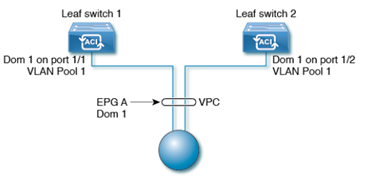
When deploying an EPG on a vPC, both leaf switch ports (on each leg of the vPC) must be associated with the same domain and use the same VLAN pool. This ensures consistent VLAN encapsulation and proper traffic forwarding across the vPC pair.
-
Can VLAN numbers previously used for EPGs be reused on the same leaf switch?
Yes, VLAN numbers can be reused for different EPGs on different ports of the same leaf switch, provided the configuration is done carefully to avoid disruption. You previously used VLANs 20–100 for EPGs on a leaf switch port. Now, you want to reuse VLANs 30-40 for new EPGs on different ports of the same leaf…
-
Recovering and Reinitializing a Standby APIC to active APIC in Cisco ACI
Recovering and Reinitializing a Standby APIC in Cisco ACI If you’re working with a standby APIC and need to verify access or promote it to an active role, here’s a practical approach to follow. 🔐 Step 1: Accessing the Standby APIC You can attempt to log in using the rescue-user account. This account is specifically designed for emergency access…
-
Configuring Port Profiles in Cisco ACI (NX-OS Style CLI) – Uplink to Downlink port
Up until Cisco ACI 3.1, fabric ports on leaf switches were hard-coded as fabric (iVXLAN) ports and could connect only to spine switches. Starting with Cisco ACI 3.1, you can change the default configuration and make ports that would normally be fabric links, be downlinks, or vice-versa. 🧩 The Discovery Catch Fabric discovery in…
-
Cisco ACI – Node states – Unknown vs discovering vs undiscovered vs Unsupported vs decommissioned vs inactive Vs active
In Cisco ACI, node states describe the status of a fabric node (like a leaf or spine switch) in relation to the APIC controller and the overall fabric. Here’s a breakdown of the common node states you mentioned: 🔹 Active The node is fully discovered, registered, and operational in the fabric. It is participating in policy enforcement and…
-
JSON Demystified: {} vs [] — What’s the Real Difference?
JSON is a data exchange format and open standard. It is based on a subset of JavaScript and is a text format that is completely language-independent. JSON Demystified: {} vs [] — What’s the Real Difference? When diving into JSON, two symbols often spark confusion: {} and []. They may look simple, but they define the very structure of your data. Let’s…
-
L3Out Subnet Scope Options in Cisco ACI
L3Out Subnet Scope Options in Cisco ACI Scope Option Purpose Export Route Control Subnet Advertises specific transit routes out of the ACI fabric. Used for controlling which external routes are exported. Import Route Control Subnet Allows specific external routes to be imported into the ACI fabric using BGP or OSPF. External Subnets for External…
-
FX Vs FX2 Vs FX3 Vx GX – Cisco ACI switches
🔧 Platform Comparison Platform ASIC Key Features EOL Status EX LSE Entry-level, limited telemetry, no FC/FCoE, basic MACsec ✅ EOL announced for models like N9K-C93108TC-EX 1 FX LS1800FX Better telemetry, some FC/FCoE support, improved MACsec ✅ EOL announced for models like N9K-C93108TC-FX 1 FX2 LS3600FX2 Higher performance, enhanced telemetry, better scalability ❌ Still active (no…