Latest posts
-
Concept of vPC in ACI
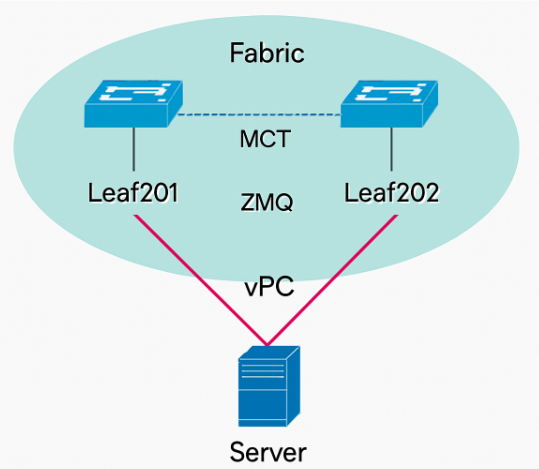
Concept of vPC in ACI In Cisco ACI, a Virtual Port Channel (vPC) enables two separate leaf switches to present a unified port channel to a connected endpoint—such as a server, firewall, or another switch that supports link aggregation protocols like LACP. In this setup, two ACI leaf nodes (e.g., Leaf201 and Leaf202) act as vPC peers, forming a logical construct…
-
Twinax vs DAC Cable: What’s the Difference?
Twinax vs DAC Cable: What’s the Difference? In high-speed data center environments, Twinax and Direct Attach Copper (DAC) cables are often mentioned interchangeably—but they’re not exactly the same. Understanding their distinctions helps in selecting the right connectivity solution for your Cisco ACI fabric or any modern network deployment. 🔌 Twinax Cable Definition: Twinax (short for twin axial) is a type…
-
Complete Steps to Create vPC in Cisco ACI (via APIC GUI)
Understanding vPC in Cisco ACI: A Modern Approach to High Availability In the evolving landscape of data center networking, Virtual Port Channel (vPC) stands out as a cornerstone of high availability and link redundancy. While traditional NX-OS environments rely on CLI-driven configurations, Cisco ACI reimagines vPC through a policy-driven, intent-based model that aligns with the fabric’s overarching design philosophy.…
-
Static Binding Deployment Options in ACI – Immediate Vs On demand
🔧 Static Binding Deployment Options in ACI When you statically bind an EPG to a port (interface), you’ll see a Deployment Immediacy setting. This determines when the configuration is pushed to the fabric. 1. Immediate Definition: The configuration is deployed to the switch as soon as you save it. Use Case: Use this when the endpoint is already connected or expected…
-
Peer Dead Interval vs Delay Restore Timer in Cisco ACI
⏱️ Peer Dead Interval vs Delay Restore Timer in Cisco ACI: Timing the Trust In Cisco ACI, timing is everything — especially when it comes to maintaining stable vPC (Virtual Port Channel) peer relationships. Two critical timers help manage how ACI reacts to peer disruptions and recoveries: Peer Dead Interval and Delay Restore Timer. Though they sound…
-
Forward Error Correction (FEC) in Cisco ACI
In Cisco ACI, Forward Error Correction (FEC) is a mechanism used to improve the reliability of high-speed data transmission across physical links, especially in environments using 25G, 40G, 100G, or 400G interfaces. 🔍 What Is Forward Error Correction? FEC is a technique where the sender adds redundant data (parity bits) to each transmission. If some bits are corrupted during transit, the…
-
Symmetric hashing in Cisco ACI
🔄 Symmetric Hashing in Cisco ACI: A Traffic Balancing Philosophy Imagine a highway with multiple lanes, and cars (data packets) trying to reach their destination. Normally, each car chooses a lane based on its starting point and destination. But what if the return journey picks a different lane? That’s what happens with asymmetric hashing — the…
-
what “Multiple (with virtual MAC)” means in the context of “Treat as Virtual IP Address” in Cisco ACI.
🧩 What Does “Multiple (with virtual MAC)” Mean? When you select “Treat as Virtual IP Address”, you’re telling Cisco ACI that this IP address should be used as a shared gateway across multiple sites or pods. To make this work, ACI uses a Virtual MAC address. 🔹 Why a Virtual MAC? In a multi-site or stretched fabric, the same…
-
Difference between “Treat as Virtual IP Address” and “Make this IP Address Primary” in Cisco ACI
🧠 Cisco ACI Demystified: “Treat as Virtual IP Address” vs “Make this IP Address Primary” In the world of Cisco ACI, Bridge Domains (BDs) are the backbone of Layer 2 networking. But when configuring subnets within a BD, two deceptively similar options often confuse engineers: ✅ Make this IP Address Primary 🌐 Treat as Virtual IP Address…
-
Deployment Scheme for SFP-10G-T-X Transceivers

Deployment Scheme for SFP-10G-T-X Transceivers The following switches support SFP-10G-T-X transceivers with adjacency limitations: N9K-C93180YC-EX N9K-C93180YC-FX N9K-C93240YC-FX2 N9K-C93360YC-FX2 Here’s a table with direct links to the official Cisco hardware installation guides for the specified Nexus switch models that support SFP-10G-T-X transceivers: Cisco Nexus Model Hardware Installation Guide Link N9K-C93180YC-FX View Guide N9K-C93180YC-EX View Guide N9K-C93240YC-FX2 View Guide N9K-C93360YC-FX2 View Guide…